

Updated October 16, 2026
When Jay's not camped on the golf course, he participates in Civil War reenactments.
The Battle of Gettysburg was a turning point in the Civil War, as well as the bloodiest battle of the war, and was fought from July 1-3, 1863. In an effort to help tell this story, every year a large Civil War reenactment is held on the anniversary of the battle. Jay would be participating in that reenactment. So would Ashley and I - as Civil War nurses.
It took some convincing on Jay's part to get me to take this trip. I have a very weird, inexplicable "history" when it comes to Gettysburg. On my first trip at 9 years old I had no interest in Gettysburg whatsoever - until a full manifestation of a Civil War soldier named Adam appeared out of thin air, sat down beside me and told me things about myself NO ONE knew, not even my own family. That afternoon I would find an actual photo of Adam in a Civil War museum! He'd been killed in Devil's Den, where I'd been sitting when he appeared to me.
Years later I would discover Abraham Lincoln was my 5x great uncle, related to me by blood.
Besides, I'd already been to Gettysburg twice by then so had no reason or desire to see it a third time apart from supporting Jay in the things he likes to do - as he does with me.
Ghosts and haunting aside, Gettysburg is a beautiful place, steeped in interesting history. Taking part in the reenactment gave me a new perspective on the Civil War that I'll try to illustrate to you in this itinerary.
When we think of the Civil War we tend to envision soldiers on the battlefield. Seldom do we stop to think about the ordinary civilians whose lives were turned upside down as a result of the war - the elderly too old to fight, teenagers, children who cared for over 30,000 injured soldiers even though they had no medical training, who took stray bullets that came through the walls of their homes and died as a result, who were forced to hide or flee their homes altogether. They were unsung heroes in their own rights and their stories need telling.


We couldn't believe our luck in finding the RV park we did - Gettsyburg Campground. It sponsored its own Civil War re-enactments on weekends with historians present! They even taught Civil War era dance lessons. The campground had every amenitiy we could hope for and then some. The sites were big, private pull through sites with full hookups and we were only a couple miles from Gettysburg National Military Park.
Gettysburg is not somewhere you want to opt for a chain motel/hotel. There are too many beautiful old historic accommodations to stay at, including 3 star B&B's and the like that are budget friendly yet very nice.
Check out Gettysburg Battlefield Bed & Breakfast as that's where we intended to originally book. Beautiful ambiance, only 5 miles from Gettysburg National Military Park, breakfast included. The entire place impressed us.
Photos below. Click on the photos to enlarge them.


You also have multiple choices of where you want to have breakfast:
-
Room service in the comfort of your suite
-
Al fresco dining on our scenic deck
-
The bright, airy Solarium group breakfast at 9 AM after our 8 am morning history program
-
The elegant Sitting Room
-
The historic Lincoln Room
Hot breakfast was served between 8:30 am and 9:30 AM.
If you require a to-go breakfast, they will prepare a chilled, boxed breakfast of hard-boiled eggs, a muffin, fresh fruit, and yogurt that you can put in your room refrigerator the night before.
They also have morning history presentation in the Solarium breakfast. You will meet Stephan Gunlock, Gerry Eak, Michael Chambers, and Michael Vice. Each presenter has a unique perspective on the history of Gettysburg and the Civil War. The programs change each day of your stay.
They will transport you back in time, providing you with a vivid understanding of the challenges and triumphs faced by soldiers, civilians, and leaders during this tumultuous period.
And for you dog owners? You'd LOVE this place! Dogs are even welcome at breakfast in every location but the Solarium. In addition:
-
You pay no pet fees
-
There are no size or breed restrictions
-
Your dog can enjoy a one acre dog park for off-leash play
-
Dog blankets, towels, and water bowls are available if you need them
-
Dog treats await you in your room when you arrive
-
Their 30 acre nature preserve is a great place to walk your dog on leash. Enjoy the trails!
-
All 12 rooms at Battlefield Bed & Breakfast are dog-friendly. Five rooms have convenient exterior doors. Consider Swan Cottage, The Tack Room, The March-Wolff Suite, Anna’s Garden, and Houghtelin’s Hideaway if you want an exterior door.
Money $aving Tip: If you can find accommodations that offer something like the Civil War and More package that includes tickets and vouchers to the various Gettysburg attractions, it's more economical than buying each attraction admission separately.
However, if that doesn't suit yours and your family's needs and you want to opt for a chain motel/hotel here are the most kid friendly and budget friendly options in Gettysburg:
Quality Inn Gettysburg Battlefield
Wyndham Gettysburg Hotel & Conference Center
The Federal Pointe Inn Gettysburg, An Ascend Collection Hotel
Days Inn By Wyndham Gettysburg
Comfort Suites Near Gettysburg Battlefield Visitor Center
At Gettysburg Campground

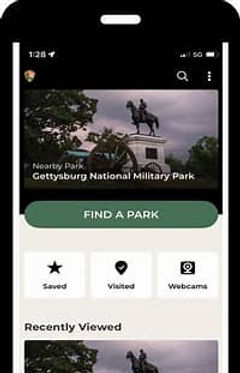
-
Search National Park Service in the App Store or Google Play.
-
Download the app.
-
Once downloaded, tap Explore Your Park.
-
Swipe/advance four times through introductory screens.
-
Tap Allow for location finder.
-
Tap Gettysburg National Military Park.
You can also download a FREE Gettysburg Battle App® It's the perfect tour partner for your visits to the Gettysburg battlefield. This GPS-enabled tour application allows you to discover all of the great historical sites associated with this landmark Civil War battle. This expanded 150th Anniversary Edition covers the entire battle from the first day to Pickett’s Charge and everything in between.
The Downtown Gettysburg Walking Tour: Self-Guided offers a unique experience where you can unlock the hidden histories of the people affected by the Civil War. You'll walk past the National Cemetery, where Abraham Lincoln delivered the Gettysburg Address, and view the Witness Tree his carriage passed on that fateful day. The tour also explores the tragic story of Jenny Wade, the only civilian casualty of the battle, and the David Wills House, where Lincoln put the finishing touches on his famous speech. The tour is available for those who prefer to explore at their own pace and includes informative plaques with historic pictures to illustrate the stories.
DESTINATION GETTYSBURG is a fantastic website!
Get the 2026 Gettysburg Getaway Guide
Check out the Getaway Guide online or have them send you one. Have an immediate question? Call 1.800.337.5015

Subscribe to their Newsletter
Don’t miss a thing that’s going on in Gettysburg; sign up to receive this fun and informative travel planning newsletter.

Tip: It really pays to check out a few of these resources as many things happen in Gettysburg and especially will this year being America's 250th birthday! Many events being held are FREE!


The best way to get around Gettysburg is to walk or drive. Though you'll need to use other modes of transportation to get to town, Gettysburg's small size makes it easy to walk to and from any point downtown. Parking is also readily available should you choose to drive. To visit nearby wineries, ski slopes, the Eisenhower National Historic Site or Sachs Covered Bridge, plan on bringing or renting a car. Other options include riding bikes or transit buses, but their fees make them more expensive than walking or relying on your own set of wheels.
Several airports – including those servicing Baltimore and Washington, D.C. – sit within 100 miles of Gettysburg, but the closest is Harrisburg International Airport (MDT), which is located about 45 miles northeast in Harrisburg, Pennsylvania. Visitors can also get to town by taking an Amtrak train from New York City, Baltimore, Philadelphia or Washington, D.C., to Harrisburg. Once in Harrisburg, travelers will need to rent a car or hop on a transit bus to reach Gettysburg. Keep in mind, the latter only operates at select times on weekdays.
We drove to Gettysburg on our latest trip and brought our bicycles along. You may wish to bring your bike along.


Participating in the reenactment as a nurse helping to care for those injured and dead really opened Ashley's eyes in that even children her own age bore this task. It really hit home for her when her Uncle Jay came into the hospital tent as one of the gravely injured she would have to help tend to. At that moment the Civil War came alive and all too real to her and she broke out in tears - a reaction we didn't expect. Jay had to remind her he was just fine, merely acting out his role. Her response?
"But Uncle Jay, if we'd been born during the Civil War that really could have been you!"
When the reenactment was over, she told us that was the best part of the reenactment because she'd finally realized just what those Civil War soldiers and civilians went through and the shock those family members must have felt in their own fathers, sons, brothers, uncles arriving in the hospital tent.
Or worse.
Morning: Arrive in Gettysburg and get settled in your accommodations.

Travel to downtown Gettysburg to the Hotel Gettysburg at 1 Lincoln Square.
Town of Gettysburg | Photo credit: experiencepa.com
I said I wanted to give you a new perspective on the Civil War, that of how it affected every day citizens.
After the Battle of Gettysburg, approximately 21,000 dead or
wounded soldiers were left behind to be cared for, which translates to nearly 10 casualties per town resident in
Gettysburg. Additionally, nearly 20,000 wounded and dying soldiers occupied public buildings and many houses in the area. This significant number indicates the extensive burden that civilians had to bear during the aftermath of the battle.
Normally I don't hype guided tours...but having taken this one I highly recommend you take it.
This is 1 of 2 tours designed to compliment one another.
This tour covers the southern end of Gettysburg. The other tour, Danger & Courage covers the northern end of Gettsyburg.
Gettysburg One-Hour Walking Tour: The Civilian Experience


Photo credit: The Civilian Experience
Group sizes are generally under 10 people for these tours. The tour lasts about 1 hour or so.
Walk historic Gettysburg with a licensed town guide from the largest and most established guide company. Discover Gettysburg’s history and discover details of the town during the battle. Listen to the stories of the civilians, who felt the bullets whistle by, heard the piteous sobs of the wounded. I'm recommending this tour because it brings a whole new perspective to the Civil War and what you and your family may have gone through had you lived back then as an ordinary citizen.
The roughly 2200 residents of Gettysburg (including children) cared for over 33,000 wounded soldiers from both armies during the battle of Gettysburg when the armies moved on from Gettysburg. They turned every available building including their homes, churches, schools, etc. into makeshift hospitals in order to do this. Most of them had no form of medical training whatsoever.
Imagine yourself being in their shoes!
This tour tells about the Battle of Gettysburg from the standpoint of ordinary, every day people like you and I and what they were forced to cope with when the two sides engaged in battle in the town itself.
[From the National Museum of Civil War Medicine, read "Voices of the Wounded: The Battle of Gettysburg".
“Voices of the Wounded” is a series of blog posts from the National Museum of Civil War Medicine detailing the experiences of wounded soldiers through their own words. Utilizing diaries, letters, memoirs, and other primary sources, these posts explore the feelings, thoughts, and actions of those wounded in action during the American Civil War.]
This tour isn't that expensive: $25 per adult, discounted rates for children. It departs from the Gettysburg Hotel and returns there. The tour guide we had was top notch, knew his stuff. The tour was interesting, educational and entertaining - well worth the $25.
Afternoon: You're at the hotel you need to be at for the above tour so after the tour have brunch or lunch at One Lincoln inside the hotel.

One Lincoln Restaurant
Beyond the Battle Museum
Visit Beyond the Battle Museum. 625 Biglerville Road, Gettysburg.
This is going to be unlike any museum you've visited before as it's a very interactive museum. You'll find out what it was like to be an ordinary person when the armies and battle of Gettysburg hit the town and bullets began flying through the walls of your house.
Caught in the Crossfire Experience
This is one interactive museum you don't want to miss! Visit the "Best New Museum" in the country, as voted on by USA TODAY 10 Best readers and named 2025 Tripadvisors Travelers Choice. The museum, Beyond the Battle, tells the remarkable story of ordinary eyewitnesses and their extraordinary experiences before, during, and after the Civil War. Through twelve interactive exhibit galleries packed with rare artifacts, the museum explores the story of Gettysburg like you've never seen or heard it before.
Caught in the Crossfire, the museum’s premier exhibit, is an immersive experience that uses cutting-edge technology to place visitors inside a meticulously reconstructed farmhouse during the Battle of Gettysburg. Visitors will see, hear, and feel what it was like for one Gettysburg family to be overrun by invading forces and trapped behind enemy lines. (This experience alone was worth the visit! You truly feel as if you have been transported back in time and placed right in the middle of the battle.)
The kids won't be bored either. The museum offers 4 different scavenger hunts to choose from:
Beyond the Battle Museum is located inside the new home of the Adams County Historical Society at 625 Biglerville Road, less than one mile north of the center of Gettysburg.
The museum is open daily from 10 a.m. to 5 p.m. Reserve tickets and see admission fees here.
The museum takes about 2 hours to tour.
Money $aving Tips:
The Gettysburg Beyond the Battle Museum offers several discounts for various groups and individuals. Here are some of the discounts available:
-
Admission for scouts and their families: $2.00 of each ticket for the weekend of September 19-21, 2025. These discounts aim to make the museum more accessible and enjoyable for visitors of all ages and backgrounds. For more information on current admission rates and discounts, please visit the museum's official website.
Gettysburg Heritage Center

Visit the Gettysburg Heritage Center where you can witness the Battle of Gettysburg from multiple perspectives – the civilians who lived in Gettysburg and the soldiers who fought here as well as the natural habitat that is so important to Gettysburg's heritage.
Browse the interactive exhibits that feature 3-D technology, immersive experiences like the Cellar Experience, and hands-on activities like the Witness Tree exhibit.
Their gift shop and bookstore is one of Gettysburg’s largest. Specializing in Civil War books, apparel, replica weapons, home décor, souvenirs, games & toys, collectibles and much more, it offers affordable souvenirs and gifts for everyone.
Adults (13+) - $11.00
Children (6-12) - $9.00
5 & under are Free!
Money $aving Tips: Use promo code: SECRET (must book on Cool Destinations website) and save 10% on Gettysburg Heritage Center activities.
-
20% Discount: Gettysburg Museum members can enjoy a 20% discount, free museum admission, and exclusive savings on events.
-
Groupon Offer: Groupon offers a self-guided tour with no reservation needed, allowing visitors to show up whenever they're ready.
-
Skip the Line: Gettysburg Heritage Center and Museum Admission Ticket
Explore Downtown Gettysburg

Photo credit: Discover Gettysburg
Explore downtown Gettysburg.
You won’t want to miss the chance to browse the shops in Gettysburg to uncover unique souvenirs. Discover eclectic boutiques and galleries downtown for hand-made art, Civil War memorabilia, and gifts in Gettysburg.
Gettysburg Goods has one-of-a-kind keepsakes.
The Horse Soldier specializes in military antiques.
Gettysburg Miniature Soldiers sells detailed miniature metal Civil War soldiers.
The Crystal Wand sells mystical arts items.
Be sure to stroll Steinwehr Avenue as it's really kind of Gettysburg's "main drag" so to speak.
Evening:
For dinner, try the Dobbin House Tavern.
89 Steinwehr Ave Business Route 15 South, Gettysburg
Built in 1776, the building is the oldest in Gettysburg. It was also used as a Civil War hospital! Fine dining restaurant and a tavern that is a local favorite. It also has a rather unique feature to it...


If you want just one of the coolest dining experiences, ask to be seated upstairs in the "bedroom". Each of the tables is enclosed in a 4 poster bed with bed curtains. The waitstaff are in period costumes too.
They had a nice variety to choose from and everything we ordered was incredibly delicious, perfect tavern food. The service and atmosphere were just as wonderful.
Begin your evening with a Rum Bellies Vengeance cocktail - rum. coffee liquor, grenadine and sour. INCREDIBLE!!! So is their homemade root beer.

Jay had the prime rib (above), I had a filet with a broiled crab cake, Ashley had a Reuben sandwich that was huge. Everything was delicious.
The Dobbin House is OPEN DAILY 10:00AM-9:00PM for gift store, food and cocktails.
IMPORTANT NOTICE ON THE DOBBIN HOUSE WEBSITE:
Please try to make your dinner reservations for our Alexander Dobbin Dining Rooms about a week in advance! Due to the increased number of visitors, the lack of staff availability, other area restaurants being closed on certain days, the Dobbin House is experiencing wait times for reservations and seating. In our desire to maintain the same high quality of service that our loyal guests have come to expect in our 48 years as a restaurant/tavern, we are compelled to limit the number of people we serve each day. Unfortunately, this means our reservations fill up quickly. We truly regret that we cannot serve all those who call for a reservation for our full-dinner menu on the same or in a few days. The best way to make sure you get a reservation is to call ahead. The Dobbin House staff thank you for your understanding, cooperation and patience!


Morning: Have breakfast and make sure you have your good walking shoes on.
Breakfast suggestion: Cottage Creperie. The cottage-style house, located at 33 Steinwehr Ave., has a long history dating back to 1891.

Lori (owner of Cottage Creperie) has kept that ambiance intact - while serving just about any kind of crepe you could think of!
I counted no less than 44 different kinds of crepes on her menu - including vegetarian and vegan options.

Because the place is so small they don't take reservations - seating inside for 12 guests and outside seating is available for approximately 30-40 guests. Get there early to avoid waiting in a line.
33 Steinwehr Avenue, Gettysburg
Open Wednesday through Sunday 8 am to 3 pm. Closed Monday and Tuesday.
Gettysburg National Military Park
After breakfast you'll head for the Gettysburg National Military Park. Start with the Visitor Center to get an overview of the battle. The Visitor's Center is also a museum with some fantastic and very interesting Civil War exhibits. You'll need to see the Visitors Center before touring any battlefields.
If you took advantage of an accommodations package then your admission is likely already covered so just bring any necessary documentation of admission with you.
Click on photos to enlarge them...


There is no admission fee to enter the building. However, There is a fee for the film A New Birth of Freedom narrated by Morgan Freeman, the Cyclorama painting, and Gettysburg Museum of the Civil War.
You can purchase admission to all of the above as a package or just admission to the museum.
At the very least, see the museum! See all fees and passes information here.
After you've viewed the museum, travel on to the exterior portion of the Gettysburg National Military Park and explore parts of it. (You won't see the entire park in one day.) It typically takes 2-3 hours for a self guided tour but if you plan to see the battlefields it can take up to 8 hours. Most visitors recommend spending 3-5 hours for a comprehensive experience.
To visit Gettysburg National Military Park, there is no entrance fee to drive through the park.
There are wayside exhibits at each tour stop that impart basic information, and this is fine for those who just want to check off Gettysburg National Military Park from there list of places to visit, not to mention the cheapest way to go. However, there are better options for learning about the battle while still touring the park on your own.
There are several ways to see the Park and battlefields:
Bus: You may have gotten a ticket for this in an accommodations package.We did take the bus tour and I'll say this about it. The bus only stops at 2 of the 16 stops one should make when touring the park and battlefields. It moves so fast you can easily miss something entirely and if you're seated on the wrong side of the bus you'll also miss key points visible only from the opposite side of the bus.
Use a self guided audio tour: A good way to tour a battlefield is to use some type of audio tour, either free or fee-based. The National Park Service offers a free video tour for those who are able to watch videos on their cell phone or other mobile device. Go to the National Park Service’s Virtual Tour web page, and when you get to a particular tour stop, watch the corresponding video.
If you have a CD player in your car, there are two CD Audio Tours for sale at the book and souvenir store inside the Visitor Center. Not only do these provide detailed information about the tour stops, both come with a booklet full of photos and battle maps. The stops on the CD match up with the designated stops on the battlefield. Cost is around $30.
Horseback: This option may be too pricey for some families, it's better suited to solo travelers and couples but it is an option. Having toured the battlefields twoce before, I was no dummy as far as the amount of walking involved.
So I figured let the horse do the walking this time! LOL

Photo credit: Destination Gettysburg
Led by a Civil War expert, you'll ride through Gettysburg National Military Park, visit the Virginia Monument and take in panoramic views at Spangler Farm. Even if you've never ridden a horse before you can easily take this tour.
Tours are offered Friday through Sunday and every Wednesday seasonally. Note that children must be at least 8 years old to participate, and that there is a 250-pound weight limit for all riders.
Horse Tours of Gettysburg also offers private tours with a licensed battlefield guide, among other options.
The horseback tour cost us $122 apiece and lasted 2 hours.
Afternoon: Visit Little Round Top and Devil's Den.

Devil's Den
Ashley wanted to see Devil's Den in particular, where the ghost of the Civil War soldier had appeared to me years prior. I don't know if she was hoping he'd reappear? But no such luck.
Devils Den is a rock formation that can be explored by the whole family. Located in the middle of Gettysburg National Military Park below Little Round Top. The rock formation is interesting enough to warrant a 2 hour excursion and is a great place for children to get some energy out. And maybe see their own solider ghost!

Little Round Top
Little Round Top is the smaller of two rocky hills south of Gettysburg, Pennsylvania—the companion to the adjacent, taller hill named Big Round Top. It was the site of an unsuccessful assault by Confederate troops against the Union left flank on July 2, 1863, the second day of the Battle of Gettysburg, during the American Civil War.
Little Round Top was successfully defended by a brigade under Colonel Strong Vincent, who was mortally wounded during the fighting and died five days later. The 20th Maine Volunteer Infantry Regiment, commanded by Colonel Joshua Chamberlain, fought its most famous engagement there, culminating in a dramatic downhill bayonet charge. The battle at Little Round Top subsequently became one of the most well-known actions at Gettysburg, and of the entire war.
If you want to take a lunch break without leaving the park, then return to the Visitors Center and eat at the Battlegrounds Cafe & Grille and Refreshment Saloon. 1195 Baltimore Pike, Gettysburg, PA

Modeled after an actual Civil War-era saloon, the Refreshment Saloon provides leisurely a-la-carte dining.
Enjoy hot and cold food selections along with your favorite made-to-order coffees (lattes, espressos, iced coffee) and bottled beverages at the Battlegrounds Cafe & Grille. Choose from a variety of cold sandwiches, snacks, hot dogs, pizzas and panninis. If you’re looking to soothe your sweet tooth, they feature regional favorites, ice cream and apple dumplings.
It's typical park-type food but convenient if you don't want to leave the park, then continue your tour.
For your convenience, order a boxed lunch for your family, small group, or couple, and dine indoors or outdoors on the terrace or in the designated picnic areas (seasonal availability). Order boxed meals in advance.
Battlegrounds Café & Grille Hours:
Daily, 8 a.m. – 4:30 p.m.
Request group dining and accommodations online or call 717-338-1243, option 5.
Refreshment Saloon Hours:
Daily, 11 a.m. to 2 p.m.
Request group dining and accommodations within or outside of listed operating hours online or call 717-338-1243, option 5.
Eisenhower National Historic Site
After lunch, stop by the Eisenhower National Historic Site if you like. Directions & transportation here.

Evening: Return to Gettysburg. Have dinner at Garryowen Irish Pub. 126 Chambersburg St, Gettysburg
Normally restaurants claiming to be "authentic Irish" leave me feeling disappointed. Not Garryowen or "GO" as it's called. FANTASTIC!
Genuine Irish fare made from family Irish recipes and the ingredients are imported from Ireland. The atmosphere didn't disappoint either with its live Irish music and enchanting outdoor dining area.

We ordered Scotch Eggs and Irish Nachos as appetizers. Perfection. I had Shepherd's Pie which was the best I'd ever had. Jay had the Irish Mixed Grill – a pork chop, Irish bacon, blood puddings, and sausages.
Both were out of this world and yes, authentically Irish.
Big thumbs up on Garryowens!
The Majestic Theater

After dinner, you might want to see a theater production or concert at Majestic Theater. 25 Carlisle Street, Gettysburg. (If any are playing at the time)


Civil War Reenactment
You can enjoy free Civil War–themed programs and living history demonstrations at Gettysburg National Military Park, plus select free events at nearby sites like Spangler’s Spring, while the major 2026 Battle of Gettysburg reenactment at Daniel Lady Farm is ticketed.
Free Civil War–Themed Events in Gettysburg
While the big reenactment is ticketed, Gettysburg National Military Park offers free, same‑day lectures and living history programs during the anniversary period:
-
Battle Anniversary Lectures – 60‑minute free programs on Civil War topics, led by park rangers and historians, open to the public with same‑day tickets (limited space) National Park Service.
-
Living History Demonstrations – Civil War reenactors in period dress demonstrate tools, tactics, and camp life. These occur throughout the park and at designated auto tour stops like Spangler’s Spring (free admission) civilwarevents.com
-
Special Talks – For example, Gettysburg’s Little Round Top: A Photographic Journey on Oct. 17, 2026, free for Gettysburg History members; $10 general admission civilwarevents.com.
Jay participated in the Historic Daniel Lady Farm reenactment, east of Gettysburg.
This large-scale, paid event features full battlefield battles, camp visits, and living history demonstrations. Tickets are required; no free admission is offered for the main reenactment.


A note on that last slide: Amputated limbs were not that "tidy" during the Civil War.

A pile of amputated limbs. Courtesy of the National Museum of Health and Medicine

An actual amputation being performed
Daniel Lady Farm
.webp)
Nestled on the outskirts of Gettysburg, this preserved property tells a story that spans generations - a story of family, war, loss, and endurance. What began as the peaceful home of Daniel and Rebecca Lady would soon become a landmark of the Battle of Gettysburg.
Imagine life here before the war; the Lady family worked this land as a modest farming household, their days filled with the rhythm of the seasons - tending crops, caring for livestock, raiding children, and building a future rooted in the soil of Pennsylvania. In July of 1863, that routine would be rattled and they would find themselves plunged into a world of chaos and conflict.
As the thunder of artillery echoed across the rolling hills, Confederate troops under General Edward "Allegheny" Johnson advanced upon these very fields. The Lady home, once a place of domestic tranquility, was quickly transformed into General Johnson's headquarters. Here, decisions were made that would shape the outcome of one of the bloodiest battles in American history.
When the fighting intensified, the home took on a grimmer purpose and became a field hospital - its floors and walls bearing witness to the suffering of wounded men brought in from the front lines.
In rooms once filled with laughter and family conversation, surgeons worked for hours on end, the space now filled with cries from broken and dying soldiers. The very floorboards beneath your feet absorbed not only the echoes of groans and whispered prayers, but the lifeblood of brave men that can never be effaced.
As you move through the restored rooms, guided by our historical interpreters dressed in authentic 19th century attire, you'll gain a sense of what life was truly like for this 1860's farming family caught in the crossfire of war. You'll see the tools they used to tend to their crops and chores, the furniture, clothing and effects that made their house a home, and learn how a brief and brutal battle forever changed their lives, their legacies and this land.
Tours of the farmhouse & barn include presentations on the Lady family, 19th Century farm life, and the farm’s role in the Battle of Gettysburg. The lower level of the barn depicts the 1863 Field Hospital.

According to the Daniel Lady Farm website, tours of the farmhouse and barn are temporarily unavailable. No reason given as to why or date tours are expected to resume given.

A "wounded" Jay coming into the field hospital
CAMPING: Camping is available to guests and reenactors with prior reservations.

Camping at the Historic Daniel Lady Farm is the perfect way to experience history firsthand. Not only are there ample experiences to be had in town, but there are often reenactors marching across a field or cavalry riding through the woods. In addition to allowing limited camping during Event Weekends, they will have historians on the property most weekends who are eager to interact with the youth as much or as little as each group would like.
Costs
-
Camping - $15 per person, per night (adults and children)
-
Deposit - $50 deposit to secure camping reservation (credited toward final total)
-
Cancellations - deposits refundable if cancellations are made 30 days in advance of your arrival. Cancellations made after this are not refundable.
-
Rescheduling - reservation dates may be rescheduled up to 14 days prior to arrival at no additional cost.
What's Included
-
Camp fire wood
-
Potable water
-
Portable toilet
-
Guided tour of the Barn and House (in season)
-
Eagle Scout and service projects are available.
Costs
-
EVENT WEEKENDS - Reenactors camp FREE with registration
-
Camping - $15 per person, per night (adults and children)
-
Deposit - $50 deposit to secure camping reservation (credited toward final total)
-
Cancellations - deposits refundable if cancellations are made 30 days in advance of your arrival. Cancellations made after this are not refundable.
-
Rescheduling - reservation dates may be rescheduled up to 14 days prior to arrival at no additional cost.
Amenities
-
Camp fire wood
-
Potable water
-
Portable toilet

Civil War Reenactment Units may camp on the farm at group rates. Units that interact with visitors as part of the GBPA Living History Program may have fees waived with prior arrangement.
We are especially open to persons doing medical, embalming, Sanitary Commission, cooking, and musical presentations. Units may consider a “School of the Soldier” weekend.
The only requirement is presenting a living history and mingling with farm visitors at times during the weekend.
Costs
-
EVENT WEEKENDS - Reenactors camp FREE with registration
-
Camping - $15 per person, per night (adults and children)
-
Deposit - $50 deposit to secure camping reservation (credited toward final total)
-
Cancellations - deposits refundable if cancellations are made 30 days in advance of your arrival. Cancellations made after this are not refundable.
-
Rescheduling - reservation dates may be rescheduled up to 14 days prior to arrival at no additional cost.
Amenities
-
Camp fire wood
-
Potable water
-
Portable toilet
Tickets
The adult admission fee for the 2026 Battle of Gettysburg reenactment at Daniel Lady Farm was $41.25, with optional bleacher seating available for an additional $26.
Parking: Free in a large field directly across the road from the farm.
The event also includes access to the restored farmhouse and barn, period displays, and the reenactment grounds, making it both an immersive historical experience and a well‑documented Civil War site.
If you plan to attend in future years, it’s best to confirm the latest admission rates and schedule directly with the Daniel Lady Farm or the Gettysburg Battlefield Preservation Association before your visit, as fees and program details can change annually.
If you are going to attend in the future and don't want to spring for bleacher seats then bring a lawn chair and make sure you have a sun hat along.
There were food trucks on the grounds when we attended but I don't know if there will be at the next reenactment.


Morning: If breakfast isn't included with your accommodations then head for the Lincoln Diner for breakfast. 32 Carlisle St., Gettysburg.

The Lincoln Diner has been serving locals, tourists, and college students for over 60 years. Their award-winning breakfast is served from 7 am until 9 pm every day.
Jay would be busy with his reenactments so Ashley and I decided to continue to explore on our own since we'd already played our roles in the first reenactment.
Antietum and The Pry House Field Hospital Museum
We decided to visit Antietum and The Pry House Field Hospital Museum: It is located on Antietam National Battlefield.
The Pry House Field Hospital Museum tells the story of a home that became a headquarters and hospital during the bloodiest single day in American history: September 17, 1862. As the Battle of Antietam raged within view of the Pry family’s house, decisions were made on this historic property that shaped the lives of soldiers, surgeons, and civilians.
Visit the Pry Barn on Antietam National Battlefield and discover how emergency medicine evolved during the Civil War and the impact on the soldiers. Below is an older video but it does tell the story of the Pry family and the soldiers who fought at Antietum.
The barn on the Pry property was used as a field hospital after the Battle of Antietam — the bloodiest day of the American Civil War. Between 400 and 700 soldiers were treated there following the battle. Today you can go inside the barn to see two reproduction ambulances and discover what conditions would have been like for those treated there.
The Pry House was used as the headquarters for both Union General George B. McClellan and Medical Director of the Army of the Potomac Jonathan Letterman during the Battle of Antietam. It was from the Pry House that Jonathan Letterman orchestrated the new Letterman System. For the first time in American military history a system was put in place to give wounded soldiers the medical care they needed from the moment they were wounded through long term recovery, making the Battle of Antietam a turning point in American medical history.
Admission is FREE but they ask you make a $5 per person donation.
Seminary Ridge Museum
From there we went to Seminary Ridge Museum, conveniently located on Seminary Ridge along Gettysburg National Military Park's auto tour route. 111 Seminary Ridge, Gettysburg.

The museum's Interactive exhibits and artifact displays are interesting enough on their own, but at the time Karlene Bloom, Independent Researcher was giving a FREE 45 minute presentation on “A Different Kind of Battlefield: Civil War Prisons and Prisoners” at the Activities Tent near Luther Statue, that we were interested in seeing. The conclusion we drew was that one wouldn't have wanted to be a POW from either side!
Conditions were beyond horrific, sickness and disease were rampant in the prisons.


In the museum itself, life-size dioramas depict wounded soldiers in rooms where collectively more than 600 patients received care both in the hospital and in the field. Conditions weren't much better than in the prisons.
Museum admission fees are listed here.
Afternoon: We stopped at the Blue & Gray Bar & Grille for lunch since it was on the way to our next top of the day. The Bar & Grille is located at 2 Baltimore St. Gettysburg.

They have a nice selection of soups and salads, shareables, burgers, wraps, sandwiches, wings and entrees.
We both had a burger - $15.
The dining room is open every day from 11:00 AM to 2:00 AM
It was busy but the staff was friendly and attentive regardless. Most importantly, the food was good!
Jennie Wade Museum
With lunch under our belts (no pun intended) we were off to our next stop - The Jennie Wade House: 548 Baltimore Street, Gettysburg.

Learn the story of the only civilian to be killed during the Battle of Gettysburg. Authentically furnished, the Jennie Wade Museum is a memorial to Jennie and life during the American Civil War. Just 20 years old, Jennie was kneading dough in the kitchen of her sister’s home for Union Soldiers when a bullet pierced two doors and claimed her life.
The Jennie Wade House features guides in period attire who are well-versed in the history of the home. For years, they’ve enthralled visitors with passionate retellings of the tragedy that befell young Jennie and her family.
Here, artifacts from the fateful day in 1863 are on display; including the artillery shell that struck the roof of the home and an original floorboard believed to be stained with Jennie Wade’s blood.
Free Parking adjacent to the museum.
Money $aving Tip: Value Plans Available
The Value Plan allows you to add 3 of Gettysburg’s greatest historic attractions to your bus tour. That’s 5 to 7 hours worth of entertainment and enjoyment at up to a 30% discount!
If you're not interested in a bus tour, Jennie Wade House website will be announcing pricing for their own value plan that doesn't include a bus tour.
Shriver House Museum
Our last stop of the afternoon was the Shriver House Museum: located in downtown Gettysburg at 307 Baltimore Street, Gettysburg.


The Shriver family—George and Hettie Shriver and their two daughters, Sadie and Mollie—moved into their home on Baltimore Street in 1860. Unfortunately, the family was able to enjoy their new home for only a short time before George enlisted in the Union Army.
On July 1, 1863, with the thunder of cannons drawing closer, Hettie made the difficult decision to flee town with her daughters. When Hettie and her girls returned home six days later, they were horrified by the destruction they encountered. As they reached their home, it became clear that Confederate forces had occupied the house during the battle. The house was in a state of disarray with furniture broken and battered, food taken, and other household items gone or heavily damaged. A neighbor, James Pierce,
confirmed seeing sharpshooters in their attic, while another neighbor stated that two had been killed inside.
Forensic testing with Luminol decades later would later confirm this, copious amounts of blood found where the neighbor stated two Confederate soldiers had been killed.
As Hettie, Sadie, and Mollie worked to rebuild their lives after the battle, George continued to serve in Cole’s Cavalry. In late 1863 and early 1864, during fighting near Brandy Station, Virginia, he was captured by Confederate forces and sent to Andersonville Prison, the notorious Confederate prisoner-of-war camp in Georgia.
Conditions at Andersonville were brutal. Prisoners faced severe overcrowding, malnutrition, lack of clean water, and unsanitary conditions. The camp offered little shelter from the elements, with many prisoners relying on makeshift tents or simply sleeping in the open. Food was scarce, and what was available was often of poor quality. The lack of adequate nutrition led to widespread scurvy and dysentery, while poor sanitation contributed to outbreaks of disease.
For George Shriver, the hardships of Andersonville proved too great to endure. Like many of his fellow Union soldiers, he succumbed to the dire conditions of the prison, dying in 1864. His death left a profound impact on his family, who were already struggling with his absence and the challenges of living in a town scarred by the recent battle.

George Shriver prison photo / Photo credit: Gettysburg Civilian Network
Today, the home has been meticulously restored to its 1860s appearance, preserving tangible evidence of the Battle of Gettysburg, including numerous bullet holes still visible along the south side of the home.
To learn more about the Shrivers’ story and 19th century life in Gettysburg, book a guided tour of the home here. See admission fees here.
Evening: After picking a very tired Jay up from his reenactment, we headed for a casual dinner at Gloryridge Tavern & Grill: 685 Camp Gettysburg Road Gettysburg.

Photos credit: Gloryridge

We discovered Wednesday night was Steak Night at Gloryridge:
First - Choose your cut of Steak:
6 ounce Filet Mignon
10 ounce New York Strip
12 ounce Delmonico
Includes Chef Preferred vegetable and starch $21.95 plus tax
Everything was very good.
Hours
Wednesday: 5:00 - 8:00 pm
Thursday: 5:00 - 9:00 pm
Friday & Saturday: 5:00 - 10:00 pm
Closed to public: Monday & Tuesday


It was going to be a Lincoln kinda day. - Ashley's idea. She wanted a day all about Lincoln.
Morning: Return to the Lincoln Diner for breakfast.
Lincoln Train Museum
First stop: Lincoln Train Museum - 425 Steinwehr Ave., Gettysburg.


Along the main road into the town is a tiny museum called the Lincoln Train Museum, a number of rooms dedicated to the history of the town and the train that carried the body of assassinated President Abraham Lincoln across the states. Inside there is a model train that runs on a track and stops at different stations, each one telling a story as it stops with images and information around the room showing how people mourned their leader after he was gunned down in a theatre in 1865.
Not a very big museum, but it was packed with really interesting items relating to the history of the United States from the last 150 years.
Enjoy American history presentations and collections, interactive train layouts, President Lincoln's Funeral journey, a ride on our recreated funeral car United States, hands on activities and more.
See a wonderful array of American heritage displays, including the Hall of History, an animated program with a scale model of Lincoln's Funeral Train, that takes President Lincoln on his very last journey, as well as a realistic virtual train ride that simulates that momentous event in history.

The Lincoln Train Museum is an interesting place though, even though it's not all about Lincoln and covers a wide range of historical periods and locations. There's also a neat scavenger hunt for kids in which they must find and take a photo of all of the busts and statues of Lincoln around Gettysburg.
ADMISSION
Adult $10.00
Active duty military: $7.50
Purple Heart Military: FREE
Children (ages 2-5): $7.50
Children under 2: FREE
HOURS OF OPERATION
Weekdays 10:00 A.M. - 2:00 P.M.
Saturday 10:00 A.M. - 5:00 P.M.
Sunday 10:00 A.M. - 2:00 P.M.
Holidays 10:00 A.M. - 5:00 P.M.
Note that this is a seasonal museum open only in the summer.
Lunch at Hoss's Family Steak & Sea: 1140 York Rd., Gettysburg. Steaks and seafood. $$-$$$
Children of Gettysburg 1863
After lunch we headed back to the Gettysburg Foundation to take Ashley to
Children of Gettysburg 1863: 451 Baltimore Street, Gettysburg.

More than a typical children's museum, Children of Gettysburg 1863® tells the stories of the children, teens and young adults who lived here during and after the battle.
Home to Children of Gettysburg 1863®, the historic Rupp HouseTM was the property of John and Caroline Rupp and their six children in 1863. It was truly a family home.

Child visitors become one of six 'character' children who actually lived through the Civil War. Through their characters they experience engaging first-hand accounts from the children who lived here during the battle including William Bayly, Albertus McCreary, Sadie Bushman and Tillie Pierce.
Kids then find the objects in the story scavenger hunt through which they gain an understanding of what children experienced during and after the battle. Find and take home meaning in the activities from the Gettysburg Address and the Gettysburg National Cemetery to historic preservation and documenting memories. They interact with living historians through a number of events like lifting the soldier's equipment pack and feeling the weight of what a Civil War soldier carried. Find a place to safely hide during the battle. Stand at the podium to deliver the Gettysburg Address.
They journey through galleries like "Growing Up in Gettysburg 1863," "The Soldiers are Coming," "Surviving the Battle" and "Remembering Gettysburg" that provide a history-based setting for creativity, discovery and learning.
Youth (6-12) $5 with ticketed adult
Children (0-5) Free with ticketed adult.
Friends of Gettysburg: Free
Adults: $9.95
Senior 65+: $8.95
AAA Member: $8.95
U.S. Military Veterans & Active Duty: $8.95
National Military Park/Cemetery
After our visit to Children of Gettysburg 1863, we went to the National Military Park/Cemetery to see the Lincoln Speech Memorial.

The Lincoln Speech Memorial is unique: it commemorates the speech Lincoln gave here and not the man himself. Thus, it is one of the few memorials in the world dedicated to honor a speech. The bronze bust of Lincoln, by sculptor Henry Bush-Brown, reveals the heavy toll the war and the nation’s suffering had upon him. Inscribed in bronze on the right is the Gettysburg Address. On the left is the letter Lincoln received inviting him to speak at Gettysburg.
The Gettysburg battlefield is FREE to visit and is open daily (weather permitting) from 30 minutes before sunrise to 30 minutes after sunset.
Gettysburg Railway
Next stop: Gettysburg Railway - 106 N. Washington Street, Gettysburg
Ashley wanted to end our day with a train ride.
The Gettysburg & Northern Railroad tour offers an exciting cultural experience that highlights the historic significance of the rail line. Enjoy a first-class train ride near the battlefield, with views of the Eternal Light Peace Memorial and the picturesque countryside. Along the way, you’ll learn about various historical points of interest and the modern-day use of the railroad, all from the comfort of fully renovated 1950s-era passenger railcars.

You'll pass a number of points of interest along the way.
You can see them all here. 90 Minutes round trip.
From $28.99 to $36.99
General parking is located off Constitution Avenue, just past Gettysburg’s Growing Place. Two grass lots, marked with Gettysburg Excursion Parking signs and located directly across from the Gettysburg College Glatfelter Hall parking lot, are open to riders free of charge.
Handicap parking, rider drop-off, and bus drop-off are available in the depot parking lot at 106 N. Washington Street.
Evening: Have dinner at the Carriage House Inn - 200 S Seton Ave, Emmitsburg, MD.


The Carriage House Inn Restaurant offers classic American cuisine and seafood in a historic 1857 building, featuring a charming ambiance with a stone fireplace and period furniture.
Nice selection of dinner entrees as well as handhelds for lighter appetites at average prices.
Hours
Sunday: 11AM–5PM
Monday: Closed
Tuesday: 11AM–8PM
Wednesday: 11AM–8PM
Thursday: 11AM–8PM
Friday: 11AM–9PM
Saturday: 11AM–9PM


Your last day in Gettysburg so we'll do some of the off beat and quirky today.
Morning: Have breakfast at Gettysburg Family Restaurant - 1275 York St #5, Gettysburg

Old-fashioned American eatery in a strip mall serving down-home meals for breakfast, lunch & dinner.
Nothing fancy but the portions are good, the food is good and I can't remember the last time I saw prices that low! It's just a comfortable, friendly place to be.
On with the weirdness!
General Sickle's Wound Marker
First stop: General Sickle's Wound Marker. Yes, you read that right. 180 United States Ave., Gettysburg,
This monument marks the beginning journey of a wounded soldier's leg that ended up almost two states away.


General Sickles was an interesting man. He was a successful lawyer and politician, as well as one of the Union's leading political generals. He commanded the forces at Gettysburg that nearly cost the Union the battle.
Before the war, Daniel Sickles was more well-known as a career Congressman and lawyer. In 1859, he discovered his wife had an affair with Phillip Barton Key II, son of Francis Scott Key. In a cold fit of rage, he assassinated Phillip, resulting in a sensational trial that ended in his acquittal, following his use of a "Temporary Insanity" plea. Ironically, it was his later reconciliation with his wife that damaged his political career.
In 1861, while attempting to rehabilitate his political career, Sickles was commissioned a brigadier general, rising to the rank of Major General in early 1863. He commanded the Union III Corps, after seeing action in the Battle of Seven Pines and the Seven Days Battles.
In 1863, the III Corps found itself at Gettysburg with the remainder of the Union Army. While the forces were deployed along the high ground in an extended fishhook formation, Sickles moved his unit forward without orders from Union commander George Meade, creating a gap in the Union line. When the Confederate Army attacked, it allowed them to simply roll up the line, dealing a decisive blow to the Union forces. As a result, Meade was forced to reinforce Sickles's III Corps, resulting in the defeat of Confederate forces at the Peach Orchard on July 2, 1863.
During the Confederate assault, General Sickles was wounded by a 12-pound cannonball in the right leg. He was sent behind the lines where the leg was amputated and returned to him. He eventually donated the amputated limb to the Army Medical Museum, later known as the National Museum of Health and Medicine, where it remains on display.
It should also be noted that post-amputation life did not slow Sickles down. He was able to ride horseback, was sent on a secret mission to Colombia, and was made U.S. Minister to Spain. He also served as President of the New York Board of Civil Service Commissioners, Sheriff of New York County, and finally returned to Congress.
Park on the side of the road at the Trostle farm and proceed down the horse path for approximately 100 feet, the marker is directly next to the barn.
Civil War Tails at the Homestead Diorama Museum
This next one is a hoot! Ever wonder what the Civil War would have looked like if it had been fought by CATS? Wonder no more. The Civil War Tails at the Homestead Diorama Museum in Gettysburg answers that question. Kids love this one...
Twin sisters, Ruth and Rebecca Brown, have taken their passion for Civil War history, dioramas, and cats to create these unique and intricate displays. They began their interest in Civil War history at the same time they began making and clay figures as kids - they were cats. In uniform. With beards. Now, years later, the sisters still think the cat angle is quirky and fun, and they hope you’ll agree. In 2013, Rebecca was able achieve her dream of living in Gettysburg and purchased The Homestead, itself a historic building that was once the National Soldiers Orphans Homestead.
Their collection of dioramas includes the Battle Fort Sumter, the Battle of the Ironclads (including a view from under the water and inside each ship with cat sailors), and The Angle/Pickett’s Charge with over 1,900 cat soldiers and measuring 5.5 ft x 7.5 ft. Along with the cats, all of the artillery, horses, and stone walls are handmade (the stones being little balls of clay). The sisters began this piece in 2000 and finished in 2013 when the museum opened.
The cat figurines are all made with a one-to-one ratio, so each model soldier represents one soldier during the real battle, not ten or twenty.
The next big project is Little Round Top, which is being extensively researched for both the positions of soldiers, but also for topology. When finished, it will be 11 ft long and contain over 5000 cats. Each figurine, about once inch or smaller, is baked in a 225 degree oven and then hand painted in appropriate colors. Rebecca makes Confederate soldiers, while Ruth makes the Union forces.
Pricing:
-
Adults: $7.00
-
Children ages 6-12: $5.00
-
Children 5 and under: FREE
-
Group rates (10 people or more):
-
Adults: $5.00
-
Children ages 6-12: $3.00
-
Be sure to check their Hours and Info page for when they're open!
Next stop: Gettysburg Dinosaur Tracks - S Confederate Ave. 39.78493°, 77.24472° Gettysburg
Gettysburg Dinosaur Tracks
Click on the photos to enlarge them.


While traveling to Big Round Top via South Confederate Avenue, one drives (or walks) across Plum Run on an unassuming stone bridge and passes by evidence of the wildlife that once roamed here. Long before the Battle of Gettysburg occurred, dinosaurs roamed the area and left their mark. Located on the bridge are three dinosaur footprints.
On one side is the print of Anchisauripus sillimani, a two-legged lion-sized meat eater. On the other are the prints of a dog-sized plant eater, Atreipus milfordensi. The bridge was made in 1938 from sandstone or siltstone taken from the Trostle Quarry in Adams County, Pennsylvania.
There is nothing to indicate they are there so enjoy hunting for dinosaur tracks!
Sach's Bridge
.jpg)
Sach's Bridge: Waterworks Rd., Gettysburg. This historic covered bridge built in 1852, was used by both Union and Confederate troops during the Battle of Gettysburg in 1863. Union Forces crossed on July 1st and Confederate Troops fled the battle on July 4th.
According to local folklore, three Confederates were hung as spies from the beams of the bridge, and have been said to haunt the bridge ever since. It's not just folklore because I encountered one of them myself while walking on the bridge, still dressed in his Confederate uniform.
Designated as Pennsylvania’s “most historic bridge” in 1938, it is also registered on the National Register of Historic Places. Built by David Stoner for $1,544, this 100-foot long and 15-foot wide bridge crosses over Marsh Creek and is a beautiful place for a walk and picnic.
This bridge can be found on Pumping Station Road in Gettysburg, Pennsylvania. Unable to drive across but a great location for a short walk. A wheelchair-accessible ramp is located next to the parking area on the northern end of the bridge, at GPS coordinates 39.79756, -77.27577, where Waterworks Road dead-ends at the bridge.
Note: You cannot walk on this bridge at night unless you're with a guided tour group.
Gettysburg Museum Of Haunted Objects
Gettysburg Museum of Haunted Objects: 55 Steinwehr Avenue, Gettysburg.

Authentic Haunted Artifacts: The Gettysburg Museum of Haunted Objects proudly houses a collection of genuine haunted artifacts, each with its own chilling story. These objects have been meticulously researched and authenticated, ensuring you are in the presence of true paranormal phenomena. From possessed dolls to ghostly photographs, prepare to encounter a diverse range of haunted objects that will leave you
questioning the boundaries between the living and the spirit world.
Engaging Experience: The Gettysburg Museum of Haunted Objects offers an engaging and immersive experience. Through interactive exhibits and multimedia presentations, you can delve deeper into the history, legends, and reported paranormal phenomena associated with each artifact. The blend of historical education and paranormal exploration creates an unforgettable adventure that will captivate both skeptics and believers. Brace yourself for a thought-provoking journey into the supernatural as you explore this unique museum in the heart of Gettysburg.
Standard Guided Tour
Person 1 Hour $ 15
Child (Ages 4-9) 1 Hour $ 10
Children (Ages 3 & Under) 1 Hour Free
More fee information here

Ouija boards, cursed typewriters, mysterious dolls that may or may not be possessed… it’s like a trip through the world’s creepiest attic!
Exploring the history of Gettysburg is why millions of people visit Gettysburg each year. Touring the battlefield, exploring the museums and interacting with living historians all allow us to connect with the historical happenings of 1863. By walking in the footsteps of the soldiers and civilians of the time, we reconnect with our past and understand the impact this great tragedy still has on us today.


The first Civil War party I was hired to throw was for six 7 and 8 year olds. Initially I was stumped...how to decorate? I found a wall backdrop of a Civil War camp and the light bulb finally came on.

Apart from buying the backdrop for less than $20 I spend nothing more on staging my focal wall, using items I already had on hand. For the mannequin's uniform I borrowed one of Jay's reenactors uniforms.
You can also get a uniform from Candy Apple Costumes. $33
The kids could crawl into the tent and actually play in it and I could use it as background 'photo booth' to send the kids home with photo souvenirs of themselves in their Civil War costumes.
If you need decorating ideas, look at Civil War reenactor suppliers websites like CC Sutlery. I got a lot of ideas doing that.

Since I'd spent so little on staging I could afford to buy some special party favors for the kids.
I couldn't believe my luck in finding replica haversacks for $5.95 each!
(An absolute steal!) $36 for all 6 kids.
A soldier's haversack was lightweight being they had to carry it great distances and was a soldier's survival kit. It usually contained:
-
3 days of food rations (salt pork, coffee beans, hardtack)
-
Eating utensils from Amazon, 2 sets $20
-
Hygiene items (lye soap, lice comb, sewing kit)
-
Playing cards
-
Money


I found a 100 bill pack of Civil War play money at Amazon for $17. That brought the total to $92. Still under budget.
(Dollar Store does have packs of modern play money for $1 each)
Just for your FYI, if you want to do this but do it cheaper, I found a bulk pack of
6 inexpensive canvas cross shoulder bags at Amazon for $12. Dye them with navy blue or gray RIT dye and lay them on a tarp to dry overnight, then throw them in the dryer on high to set the dye.
Make sure they're completely dry before you throw them in the dryer.
They aren't authentic but the kids won't care or even know the difference. They just like to have something to take home from the party.

For the salt pork I substituted beef jerky strips. I had plenty of coffee beans on hand so made small baggies of them and I made my own pemmican bars and put those in a Ziploc bag.
The kids loved having their own haversack just like a real soldier, that they could wear with their Civil War costumes.


Beef jerky
Chicken Pot Pie
Johnny cakes
Recipe
Cornbread
Molasses cookies
Rice, peas & smoked ham
Peach cobbler
Lincoln cake
Pemmmican
Very interesting videos!
What I found with kids is that they were very hesitant (or just refused) to try anything they hadn't eaten before. Unlike my generation, they were never made to eat anything they didn't like so never learned to try new foods. Let's face it...Civil War food wasn't exactly all that palatable. So for kids, your best bet is to serve sweet Civil War foods on a dessert table. Explain what the foods are that are like foods of today. For example, I'd ask the kids "Have you ever eaten a granola bar?" then explain pemmican was like the first granola bar that are like granola bars they eat today.
Or you can just serve modern foods they're accustomed to eating - but either way, don't make a whole lot of food for them or you'll be left with a pile of leftovers.

Civil War Board Game

123 Homeschool offers a FREE printable Civil War board game here.
Complete instructions for the free civil war game are included, but basically 2-4 people play by reading the card out loud and move as directed on the card. The first player to get to the end wins. In reality, everyone wins because kids will see, hear, and say the information helping improve retention!!
Note: Make it more interesting to play by each child picking to be either Union or Confederate. Then for the cards that have a confederate or Union flag, you only get to move if you are on that side of the Civil War.
Looking for more fun ways to learn about the American Civil War for Kids?
-
Civil War for Kids Printable Book to color, read, and learn
-
Famous People in the Civil War Flip Book
-
Free Civil War Worksheets
-
Civil War for Kids – students will learn about slavery, famous Americans from the Civil War, famous battles, and how our nation stayed together. Lesson includes printable worksheets, mapping activities, printable civil war board game and more!
Make A Mobile

This will work for smaller parties.
You'll need:
1 clothes hanger per child
4 pre-drilled, unfinished wood discs
per child
Monofilament fishing line
Self adhesive scrapbooking Civil War stickers - 1 sheet per child
1 penny per child
1 pair scissors to cut fishing line
A glue gun for the pennies
I set up a craft table on my deck and let the kids make a Civil War mobile.
The kids could choose from their sticker sheet which stickers they want to put on their mobile wood discs.
Get your sticker sheets first so you know how big your wood discs need to be to accommodate the largest sticker on the sheet.
If they wanted a penny on their mobile I hot glued that to the wood disc.
Hang the wood discs with a length of monofilament fishing line from the hanger.
Stagger the wood discs when hanging them, with different lengths of fishing line.
The kids really liked this activity and having a mobile to take home with them. And it's a simple project to do.
Civil War Word Search


Free printable - Have the kids complete a word search puzzle. The first child to finish is the winner and wins a prize.
Give them each a highlighter to mark their words on the sheet. It works better than a pencil or pen.
Horseshoes

Soldiers endured a whole lot of boredom in camp between campaigns. One way of relieving the boredom was to play horseshoes.
You can buy an inexpensive metal set of horseshoes here.
Cup and Ball
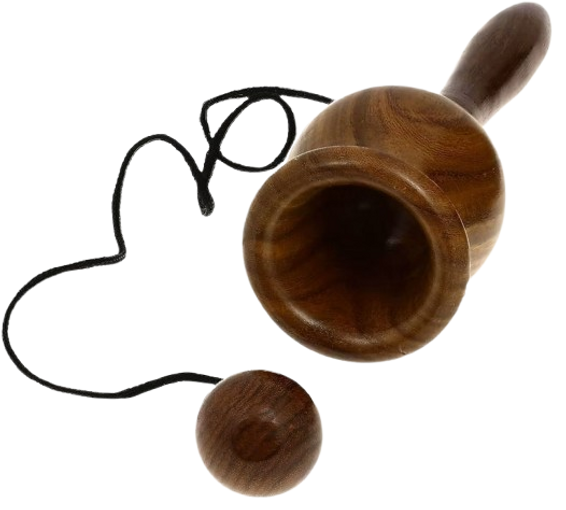
Cup and ball is a game of skill and was very popular in the 19th century. The object is to toss the ball into the cup but it is not an easy game to master.
I awarded a prize to the child who could get the ball in the cup the most times in a row.
Civil War Trivia

A trivia challenge is not only fun but a great way for kids to learn about the Civil War.
This game available from Amazon for $15.
Letters Home

Soldiers in camp spent any free time writing letters home more than anything else - and waiting to get letters from homes.
Have students imagine they are soldiers in the Civil War. They should write a letter home telling about various aspects of the war: the training, the battles, the camp, food, conditions, and so on. Let them take their letters home and read them to their family.
The Drummer Boys
This next one won't be for everyone...but hands down it was the kids favorite at the party because it told the story of kids their own age that were in the Civil War. That and kids love to make noise...
By way of explanation...I was a musician, music teacher and played multiple instruments including the drums - which is how I came up with this idea and why I was 'crazy' enough to do it. Banging drums don't bother me in the least. LOL


This works best for small parties because you'll need a snare drum with strap and drumsticks for each party guest.
And you might want to get a pair of earplugs for yourself if kids banging away on drums makes you want to hang yourself from the garage rafters.
(PLEASE DON'T!)
You can rent snare drums if you have a music rental shop near you, you can talk to a school music teacher or band director for advice on where you can get inexpensive snare drums, or you can shop online for secondhand drums.
If you want to try this but can't afford drums, then use coffee cans with lids and drumsticks! Kids just like to have something to bang away on.
Many people don't realize that children comprised nearly 1/3 of both the Union and Confederate armies. The drummers communicated the commanding officers orders to the troops as everyone could hear the drums over the din of the battle. Every drum cadence was a different order being drummed out to the lines of soldiers. Examples in the video below.
You want to teach the kids a fairly simple cadence that they can easily learn.
I used the Commence Firing cadence demonstrated in the video above- nice and simple.
Start this activity by telling the kids the story of the Civil War drummer boys, the most notorious of them being Johnny Lincoln Clem. (Below)

He ran away when he was 9 years old, following the death of his mother, to enlist in the Union Army in 1861. Rejected by various units due to his age and small size, little Johnny latched on to the 22nd Michigan Infantry regiment when it mustered in 1862, and followed them around. The regiment’s members eventually relented, allowed him to tag along as a mascot and drummer boy, and even voluntarily raised money to pay him the $13 per month monthly wage of a Union private. In 1863, he was finally allowed to officially enlist.
It was during the Battle of Chickamauga, September 19 to 20, 1863, that John Clem earned his place in Civil War lore and legend.
During the two-day battle, the 12-year-old displayed conspicuous courage, after riding to the front atop an artillery caisson. There, fighting on the firing lines with his signature weapon, a sawed-off rifle that had been trimmed to fit his diminutive size, Clem impressed his comrades with his bravery and steadiness under fire, and in hand to hand combat as Rebels and Yankees charged and counter charged each other and came to close-quarter grips during the ferocious fighting that marked that battle. In the course of the fighting, Clem’s Army cap was shot through three times by bullets.
Clem’s courage was not enough to ward off Union defeat, however, and the federals came to grief. At the close of the battle the following day, during the afternoon of September 20, 1863, as Union forces hurriedly retreated, Clem found himself one of the thousands of defeated soldiers separated from their units during the chaotic flight. Wearily lugging his sawed-off rifle, Clem heard a horse approaching from behind, and looking back, was confronted by a Confederate colonel on horseback, riding ahead of and urging along his pursuing Rebel soldiers. Seeing a little boy in Union blue toting a rifle, the enemy colonel shouted at Clem to “Drop that gun!” and surrender forthwith.
Young Johnny turned around, coolly raised his rifle, took aim, and shot the Confederate colonel off his horse, then hauled off at a mad sprint through brambles and brush until he reached the safety of Union lines. After the battle, Clem, aged 12 years old, was officially promoted to the rank of sergeant, thus becoming the youngest noncommissioned officer in the history of the United States Army. A distinction he holds to this day.
Clem’s conduct was widely reported in newspapers at the time, turning him into a nationally-known figure, and he was eventually decorated for his courage by Salmon P. Chase, Secretary of the Treasury and future Chief Justice of the United States Supreme Court. A popular Civil War song, “The Drummer Boy of Shiloh“, written by William S. Hays and published in Harper’s Weekly soon after the Battle of Chickamauga, was reported to have been inspired by the exploits of Clem.
A month later, Clem was captured and made prisoner by the Confederates. Released in a prisoner exchange, he returned to ranks and fought in the Army of the Cumberland. Twice wounded during the war, he was finally discharged in September of 1864, his final rank being Brigadier General.
Following the war, Clem graduated high school in 1870, then rejoined the US Army in 1871, when he was commissioned a second lieutenant by President Grant. He married twice, raised a family, and served until 1915, before retiring as the last Civil War veteran still serving in the United States Army. John Lincoln Clem died in 1937, aged 85, and was buried in Arlington National Cemetery.

John Clem and his grave
at Arlington Natl. Cemetery

Many of these boys were injured or died in battle.
The story of the first African American drummer...
So part 1 of the activity was teaching the kids about the drummer boys and what the purpose of their drums was.
Part 2 was teaching the kids one or two of the more simple drum cadences
they could bang out themselves on their drums. I'd break the cadence down into a few beats at a time and have the kids practice that section. Then we'd add the second small section of the cadence and practice that section, then on to the next small section of the cadence until the kids could put all of the sections together into one cadence. You're not looking for drumming perfection! You're looking for the kids to have fun banging away while learning about their Civil War peer counterparts. They can drum the entire cadence entirely wrong - doesn't matter.
After we got a couple cadences down the kids wanted to try marching while drumming the cadences out. Hey, I had their interest (sometimes a challenge in itself!) so why not? We marched and drummed and they were content doing that for quite awhile. They were having fun, they'd learned about the child drummers and that was the whole point of this activity.
Kids In Battle gives you the story of a few of these child soldiers.
The Drummer Boy of Shiloh