
Basic Survival Skills
- Pat Jackson

- Jan 11
- 24 min read

I promised you some survival training in my Lebanon, MO Survival Camp article so we'll start at the very beginning if you haven't had any survival training.
We're going to start with a really good video. While I don't agree with every single point in it, 99% of it is completely valid and it contains points that many survival classes don't teach as important as the points made in it are.
Survival isn't about a Doomsday scenario although with our society in the condition it's in a Doomsday scenario isn't out of the question. It's about knowing what to do, keeping a cool head while everyone around you is losing theirs, and having the confidence in your skills to shove fear aside and perform those skills.
Panic in any crisis is what will get you killed faster than anything and panic arises in those who don't know how to handle or what to do in a crisis. It's knowing when to make your move before you have to contend with those panicked mobs on top of the crisis itself.
I'll never forget one of the first things I was taught when taking my CERT (SWAT) instructor course and the riot training that was part of that course:
Within 1 hour of a the masses realizing they're in a crisis situation, they will begin losing their minds and empty store shelves, not knowing what else to do.
With each passing hour of that crisis their fear escalates and they begin losing logical, rational thought. By the time their Fight or Flight instincts peak, they will kill you over a can of beans to eat without so much as a second thought.
Think that can't happen? Remember the COVID Scamdemic and toilet paper hoarding?
There was absolutely no reason whatsoever to hoard toilet paper to begin with - much less come to blows over it. All the hoarders succeeded in doing was creating a nationwide toilet paper shortage and nothing more. The gals above have reached the first stages of Fight or Flight so are no longer thinking rationally or logically. Their fear of not knowing what to do has taken hold so they're acting completely irrationally. This is why you need survival training - because you will be dealing with hordes of people acting just like the gals above and worse.

We now know (even through legal court testimony by criminals like Dr. Fauci) that the "COVID' virus never existed, that people were getting sick with radiation sickness from 5G being switched on worldwide and that the "vaccine" was a deadly biowarfare agent meant to genocide people worldwide in the government's depopulation agenda.
Yet how many people still believe "COVID" not only exists but still live in fear of it? The majority of the population and even our health care professionals.
The first thing you need to decide when deciding whether or not to prep and get survival training is do you want to survive what could possibly happen in the way of a crisis? If our government continues to commit crimes against humanity do you want to survive what they may perpetrate? If they nuke the planet do you want to survive the planet being a nuclear wasteland with people dropping dead from radiation poisoning? (Just one example)
Don't think it can't happen! Remember Hiroshima and Nagasaki? It already has happened and we're on the brink of it possibly happening again with the entire world's nations at war with one another.
SURVIVAL PSYCHOLOGY
The most important element of survival is having survival psychology or the will to survive no matter the odds. Being in a survival situation is not just physical. It is largely mental, emotional, psychological. If you don't have a survival psychology, you may as well skip survival training altogether.
The following is a military perspective on survival psychology but it's the best survival psychology video I've found to date. (You only need to see Part 1)
The Psychology of Survival isn't something you develop. You either have it or you don't. It's in your nature or it isn't.
Similarly, if you think you can "lone wolf" it through a survival situation, you stand little chance of surviving. Successful survival is about working as a team with like-minded individuals. As survivalist/SERE instructor, Byron Kerns says "You help others, you'll help yourself. In the woods. Or in civilization."
He's absolutely right!
Let's start with the basics...
BECOMING THE GRAY MAN

What is the Gray Man Theory?
The gray man theory is a survival strategy that emphasizes blending in with your surroundings to avoid becoming a target during emergencies or chaotic situations. This approach is rooted in military culture and is designed to help individuals navigate environments without attracting attention. The goal is to appear unremarkable, making it less likely for you to be noticed by potential threats, whether they are criminals or hostile individuals.
The video you just watched states you don't want to look too military... Completely disagree! Having been in law enforcement, both law enforcement and the military have been practicing house-to-house searches and round up of citizens for years now. Law enforcement became militarized years ago!
That being the case and being they're the ones who would be the threat you'll be forced to evade, it makes far more sense to me to look like them so they assume you're one of them and don't target you as a threat!
A CERT team:
Do they look militarized to you? This is how law enforcement doing citizen round-ups will be dressed. If I'm wearing my CERT gear (that I still have) where basically all you see is the eyes once we have our face/gas masks, sunglasses, helmets, etc. on are they going to very easily mistake me for one of them? More than likely! The same holds true on the military front.

Don't get a tactical molle backpack? If I want to blend in with those pursuing me why wouldn't I use the POLICE molle backpack CERT team members wore, to make them think I'm one of them??? I don't know how much more Gray Man inconspicuous you can get than that!
So I don't agree with the don't look too militarized thing. Not only that, but if those trying to evade capture think you're one of their pursuers they're going to do their best to avoid you - so you won't have to deal as much with them and their Fight or Flight insanity. Just my thoughts on the matter...
But each survivalist needs to do what fits their own circumstances.
Either way, a good survivalist knows evasion and escape tactics or SERE.
THE RULE OF 3's

The Rule of 3's prioritizes what one needs to do in any survival situation.
During the Scamdemic I was observing those without any kind of survival training on social media and how they were behaving. It was sad, scary and comical all at the same time.
One gal broadcast all over her social media the fact she was "prepping", had just ordered a big shipment of survival stuff, who she'd ordered it from, what she'd ordered, when it was being delivered and her address was on her social media page.
She couldn't understand why porch pirates had stolen everything she'd ordered when Amazon delivered it.
TIP: Do not advertise the fact you've prepped! You set yourself up as a target when you do.
In several other cases, people rushed out and stocked their freezers to the brim.
Food is the last priority in the Rule of 3's! When I asked these same individuals "What are you doing for a potable renewable water source?" or "What's going to happen to all of that stuff in your freezer when the power goes off?" this was the response I got:

Perhaps the scariest thing I heard was a conversation among a group of young urban "preppers" who apparently thought survival is a video game. This was their plan:
Escape to a forested wilderness area - although they didn't know what forested wilderness area they were escaping to! They hadn't planned that yet! Or how they'd even get to said forested wilderness area from the city they were in.
Set up a base camp in said wilderness area.
SHOOT TO KILL anyone who came upon their base camp.
They then proceeded to establish a time they'd all meet at a range to practice shooting to kill anyone who might come upon their base camp!
Their Rule of 3 was apparently SHOOT TO KILL, SHOOT TO KILL, SHOOT TO KILL.
This is not survival. This is psychopathy!
I have to admit I did immensely enjoy putting the kibosh on their SHOOT TO KILL plan,
"In the case of martial law the first thing that will happen is that the military will shut down gas stations and seize all fuel for their own use. Then they'll set up road blocks to prevent anyone from escaping. So just what is you plan to get to this forested area since you won't be able to drive there?"
"What forested wilderness are you planning to bug out TO? The very government that will be attempting to capture you owns the vast majority of public wilderness areas...so where's the first place they're going to be looking for you?"
"You can't just set up a base camp on privately owned wilderness areas. We own those properties and won't tolerate a bunch of delusional renegades setting up a base camp on our properties and shooting to kill anyone! You'll be the ones looking down the barrel of a gun if you try that! And we all hunt so are far better shots than you are!"
You could've heard crickets chirping after I pointed all of this out to them.
Memorize the Rule of 3 and you know precisely what to do and in what order to best protect yourself. It sets your survival priorities for you and you will know how to deal with nut cases like the aforementioned.
AIR Unfortunately with all the chemtrail spraying and biowarfare agents the government and deep black military are releasing onto the population, you're going to be limited to the extent you can protect yourself against this. Nonetheless, you need to do what you can to protect yourself against airborne agents, toxic smoke, etc.
Ideally, having a Hazmat suit is a plus but the problem is a Hazmat suit doesn't give you an oxygen supply. You're going to need a respirator of some kind.

Your best bet for an affordable gas mask is to buy an M-15 Israeli civilian gas mask with spare cannisters.
They are designed for protection against Nuclear, Biological, and Chemical (NBC) threats. They are trusted by Israel’s Defense Forces and are known for their comfort, reliability and high filtration standards.
I got mine from Army Surplus World for $50. But there's been such a run on gas masks that they're now out of stock.
You can find these masks available for purchase on platforms like eBay or specialized military surplus websites.
Coleman's Military Surplus carries the M-15 but you'll pay $100 for it. It's still your best bet.
SHELTER
As long as you have a tarp, you have a form of shelter.

Invest in the best heavy duty, waterproof tarp you can that has grommets in it to put tent stakes in if need be. You want a color of tarp that's going to blend in with your surroundings so it won't be easily spotted, especially from the air.
I live among thousands of acres of forest so my tarp is 12'16' heavy duty, waterproof with grommets, Woodland Camo that blends into the forest around me. $36.
But if you live in an area with brutal winters like I do, you'd better be able to build a shelter that will keep you from becoming hypothermic and freezing to death.
This is the winter shelter I use:
Inexpensive, easy to construct, kept me toasty warm even in single digit cold temperatures and even though the fire you build in it is small.
You'll also need to know how to build a survival shelter using just what you have around you.
If you live in a climate with winter then you should also know how to build a snow shelter or snow cave.

Note that it's not enough to watch videos a few times to know how to construct a shelter or perform any other survival skill. You must go out and actually practice doing it - even if it's only in your own backyard.
WATER
You'd be surprised how fast you and your body start losing it without adequate potable water. Three days is the death point...but going through that 3 days without water is the worst hell you can imagine in getting to that death point. You'd better know how to find water when there's none in sight and how to make it safe to drink.
I have a Kleen Kanteen entire water kit that can hook right onto my molle backpack. I love my water kit! It's compact and has everything I need in it.
Here are the links for the items in the survival water kit:
Individual Items - HIGH Priority: 1 ) 40 oz. Stainless Steel Canteen - Klean Kanteen http://tinyurl.com/SS-Canteen-WK1
2) 20 oz. Stainless Steel Cup w/ Folding Handles - GSI http://tinyurl.com/SS-Cup-WK1
3) Sawyer Mini Water Filter Kit http://tinyurl.com/Sawyer-Water-Filte...
4) Water Pouch - from Condor http://tinyurl.com/Condor-Water-Pouch...
5) Water Pouch - from Maxpedition (does NOT have MOLLE straps) http://tinyurl.com/Water-Pouch-Max-WK1
OPTIONAL Items:
1) Lighter/s: http://tinyurl.com/Lighters-WK1
2) Exotac FireRod - w/ Replaceable Rod and Tinder Compartment: http://tinyurl.com/Exotac-FireRod-WK1
3) Mini LED Flashlight: http://tinyurl.com/Mini-LED-Flashligh...
4) Tactical Neck Knife - Freeman Outdoor Gear: http://www.freemanoutdoorgear.com/pro... 5) Cotton Ball (Scrounge from Home or Use Link): http://tinyurl.com/Cotton-Balls-WK1
6) Paracord - Made in USA: http://tinyurl.com/USA-Made-Paracord-WK1
I configured my kit a little differently. I did not put the optional items in my water kit, they are in my bug out bag. I did add water purification tablets to my water kit and a carabiner to hook the water pouch to my bug out bag since it didn't have molle straps.
How to Find Water in Remote Areas
In remote areas, finding water can be challenging, but with the right knowledge and techniques, you can increase your chances of staying hydrated. Here are some methods to consider:
Follow Animal Tracks: Larger mammals often follow distinct trails that lead to water sources.
Look for Green Vegetation: Green areas in a desert or plains can indicate the presence of water.
Search for Natural Depressions: Water tends to collect in low-lying areas, such as valleys or depressions.
Investigate Dry Riverbeds: Digging a few feet down in dry riverbeds can reveal hidden water sources.
Utilize Morning Dew: Wipe off leaves and grass with a cloth to collect morning dew, which can be a reliable source of water.
Remember, water is vital for hydration and maintaining bodily functions, so it's crucial to prioritize finding water before other survival needs apart from air.
HOW TO BUILD A SOLAR STILL
A solar still will work even in a desert although it's a very slow method of collecting water.
FINDING WATER IN AN URBAN AREA
If you live in an urban or suburban area finding water sources will be a bit different than finding water in a wilderness setting.
Know where sources of water are in your area - fountains, swimming pools, etc. because if the city water supply gets shut off...
Don't plan on buying bottled water because those in a panic will empty store shelves of bottled water. Not only that, containers of water are heavy to carry in the event you have to bug out.
Did you know you can store water in your bathtub in an emergency? Get yourself a WaterBOB. Figure you will need 1 gallon of water per person, per day.
You'll also need a RENEWABLE source of water. I have a rainwater catch system installed and camouflaged so you don't even know it's there since the government is now trying to make collecting rainwater illegal and has in many states already.
FOOD

You can live 30 days without food so it's the last item within the Rule of 3's you need to be concerned with. Most people buy the wrong things when stocking up on food. You want items with a long shelf life - rice, beans, etc. that don't need to be refrigerated in case the power goes off. Survival Food List, Strategies, & Stockpile Checklist
While you can purchase retail MRE'S (Meals Ready to Eat) they're godawful expensive. It's much easier and less expensive to make your own MRE's. I'll do a separate article on how to do that.
When storing your food stockpile, don't store it all in one location. Starving marauders can snatch your entire food supply if it's all in one place, should they break into your home.
Spread it around in different locations that are out of sight if possible. You can even bury caches of food as long as it's in proper containers to do that.
The other thing you want to consider doing is making a root cellar to help keep stockpiled food from spoiling.

A DIY root cellar can be as simple as garbage cans properly prepared and buried in the ground.
How many calories will a person in a survival situation need? A minimum of 1800 calories per day.
That briefly covers the Rule of 3's.
BUGGING IN VS. BUGGING OUT
One of the most important decisions you'll have to make in a crisis is whether you're going to bug in or bug out. Bugging in refers to the strategy of staying at home during a survival situation. This involves relying on your home as a stronghold, fortifying it with supplies and defenses, and living off your stockpiled resources. The advantages of bugging in include a familiar environment, access to supplies, and the ability to avoid immediate dangers. However, it also comes with risks, such as limited escape routes if conditions worsen or if your supplies run out.
The term "bugging out" refers to the act of quickly evacuating your current location to a safer place during an emergency. This concept originated from military tactics, where troops would "bug out" when their position became compromised. In survival contexts, it involves planning for emergencies by preparing to leave your home or current location to find shelter, food, and protection until the situation improves. A well-thought-out bug-out plan includes identifying a safe location, assembling a bug-out bag with essential supplies, and having a means of transportation to reach that location.
Most novices plan on bugging out because they have a romanticized, sanitized idea of what bugging out and surviving in unfamiliar territory involves. And if you have young children, successfully bugging out will be next to impossible without detection. Kids have short attention spans, they're noisy and physically unable in many cases to endure the rigors of bugging out.
Not only that, ask anyone without any formal survival training where they're planning on bugging out to and they'll all tell you "To a wilderness area". Won't be hard for pursuers to follow the crowd! Nor could most of them survive in a wilderness area. Ask any of us who live in one about the daily rigors of simply living in a wilderness area much less being in a survival situation in one.
I know of one gal who assumed she was survival trained because she was the only female in a Boy Scout troop as a child. Her plan was to bug out to a local cave everyone in the area knows about (and also plan to bug out to) that is full of bat guano.
Breathing the fumes of bat guano can make one sick, particularly if the guano is disturbed and the spores become airborne. The primary health risk associated with bat guano is histoplasmosis, a fungal infection that can cause respiratory issues and other symptoms similar to the flu. It is crucial to take precautions when dealing with bat guano, such as wearing protective gear and ensuring proper ventilation, to minimize the risk of exposure to harmful spores and pathogens. So not the best bug out plan!
Your best bet is to bug in and fortify your home against break in's, missiles possibly falling on your roof, etc. You're in familiar territory, you have far more room to stockpile supplies, etc.
Ideally you'll have a bug out plan in place for when house-to-house searches are being made but it should be to a nearby location and temporary while those searches are actually taking place.
In my own case, I plan on bugging in but have a bug out plan in place for that possibility, Our bug out location is nearby, it's already set up, we can get to it without being tracked and the kids in our group can easily make the trek. Yes, our kids are survival trained.

Bugging out should be a last resort.
THE BUG OUT BAG

What is a bug out bag or BOB? It is a pack you carry when bugging out that carries no more than a 3 day supply of gear that allows you to survive when traveling to your bug out location.
Every survivalist has their own idea of what style bug out bag works best for them.
You have to find the style that works for you and your particular circumstances and geographical location.
The most important thing in choosing your BOB is fit. Have a professional at a sporting goods store measure and fit you for you pack so that it fits you correctly.
This is critical.
Ideally you want a pack with a waist belt. The weight of the pack is carried on your hips, not your shoulders!
Packs come in different sizes and you also want your pack size to be proper for your specific body build.

You also want to avoid packs made specifically for backpacking that have an inner or outer frame. That frame causes the wearer to walk in a slightly stooped position and you don't want to be hiking, running, climbing as you would in a survival situation for up to 3 days in that stooped position.
Color of pack: Choose one in natural colors like black, navy blue, olive green, gray, brown, khaki that won't attract attention. Make sure there are no elements on the pack that would catch the sun and give away your position.
As I said, I disagree with the "Don't get a molle pack" line of thought. In my own case, I can easily adjust the contents and weight of the pack by adding or removing the molles - the pouches that attach to the pack with Velcro. Nor is a molle pack likely to attract much attention being I'm in the boonies to begin with, like a molle pack might attract with someone who lives in a populated urban location.
When purchasing your BOB make sure you can return or exchange it if you find your pack does not fit you correctly.
WEIGHT OF PACK
This is critical! The weight of your pack should be no more than 10% of your total body weight! If you're an Olympic athlete in prime physical condition, you can go up to 15% or 20% - but only if you're an Olympic athlete!
So if you weigh say 130 pounds, your pack should weigh no more than 13 pounds fully loaded.
The most common mistake novice preppers make...

You're only packing the minimum gear for 3 days of survival. You are not packing everything but the kitchen sink! (Ladies)
PURCHASING YOUR BOB GEAR
What survival gear you buy for your BOB will depend on how advanced your survival skills are (the more advanced your survival skills the less gear needed), your geographical location, who is in your survival group and what their survival skillsets are, how much weight you can carry in that pack taking into account your weight, etc.
Outfitting yourself with gear can be an expensive proposition but it doesn't necessarily have to be. What I did rather than buy all new gear was to buy used gear in good condition when I first started out. Then as I found new gear that worked well for me I'd replace the used gear with that new gear so I could spread the cost of outfitting myself out over time.
Another option is to become a survival gear tester:
How to become a survival gear tester to get free gear
To become a survival gear tester and receive free gear, follow these steps:
Sign Up: Visit the testing program websites of companies like Agilite, Maxtacs, Arctix, or OutdoorCrunch.
Apply: Complete the application form and provide details about your interests and experience with survival gear.
Selection: Be selected to receive product samples or surveys to provide feedback.
Test: Use the gear under real-life conditions and document your experiences.
Review: Submit detailed reviews and feedback to help shape the future of survival gear.
By participating in these programs, you can gain valuable insights and contribute to the development of high-quality survival gear while at the same time getting free gear to outfit yourself.
Whenever possible, purchase multitool gear in which several tools are part of one primary tool, like the survival shovel below that serves several functions.

This will save you money and pack weight.
Similarly, you won't have to buy some gear that others in your survival group might have and you can divvy up some gear among you that can be shared, to keep your pack weight within correct limits. For example, not everyone in your group would necessarily need a stove and cooking utensils. That's an item that can be shared among the group.
WHAT TO PUT IN YOUR BUG OUT BAG
How advanced are your survival skills? If you're new to survival, this is what I carried in my BOB as a novice:

Sleeping/Shelter: Tarp, tent stakes, mosquito netting, welder's blanket pieces, 550 paracord, bivy sack
Water kit Mini fishing kit
Gas mask Headlamp
Fire starting kit First Aid kit
Multitools Nested cooking/eating kit
SOLO stove Night vision mini binoculars
Emergency whistle Compass
SAS Survival Handbook Waterproof work gloves
Duct tape Survival saw
Toiletries + small sewing kit Bear spray + mosquito repellant
Snare wire OPTIONAL: Hammock
Waterproof pouch containing USB stick with important documents, money, cell phone, solar charger (not optional)
You also want to put your clothes (including a rain poncho) and a map of the area you're in, in your BOB.
A WORD ON CLOTHING:
You want to be able to layer your clothing and you want fabrics that wick moisture away from the body - wool, polyester, nylon, etc. NOTHING COTTON!
For those in cold weather climates: The military has a great series of clothing designed to layer. It is rather expensive but in my case necessary due to a rare life-threatening blood disease I have that makes me uber hypersensitive to cold.


Something like these nylon convertible hiking pants are ideal. They're made of moisture wicking nylon, unzip the pants legs to go from long pants to shorts.
Two pair of pants in one and they're lightweight in your BOB.
If they get wet, they will dry quickly.
You want a good pair of waterproof hiking boots that are comfortable. I wear my cop boots because I can walk hours in them comfortably, they're waterproof and steel toed to protect my toes.
If your pack weight limit allows, I've found a pair of mesh swimming shoes are also beneficial for wading through water as they dry quickly and allow your feet to breathe.

You also want a good sun hat and sunglasses. I love my bucket-style hat with attached mosquito netting. Keeps our mosquitos the size of 777's doing fly bys past your head and face from driving you to the brink of insanity.
Another must is a bandana. That little square of cloth is invaluable as you can use it for so many different things. I carry 2 of them in my BOB.
Obviously if you live in an urban area your BOB is going to be different than a wilderness BOB.
BOB's FOR KIDS
Do your kids need their own BOB's? If they're not of infant or toddler age, YES! And again, they should be of neutral colors - nothing neon, flashy, glittery or of a style that would draw attention to them. However, their packs will be configured somewhat differently than those of an adult. Yes, they should have a professional fit them for their pack as well. It's even more important for a child in that they'll tire of carrying them in a bug out situation as it is, without their pack being uncomfortable to wear. There are BOB's made specifically for kids.
The reason you want a BOB for your kids is that in chaos it's very easy for your kids to get separated from you. They need to survive on their own until you can locate them again!
What do you put in a child's BOB?
A contact sheet including all contact information about yourself and identifying/medical information about the child if they have any kind of medical condition
Packets of water and a Lifestraw
Food that doesn't require preparation such as granola bars, protein bars, trail mix.
A headlamp for light when it's dark
A police whistle to signal for help (NOT a toy whistle!)
A smaller tarp they can make a shelter with (depending on the child's age)
A mylar blanket for warmth
Some small games to keep them entertained and their favorite small toy to comfort them
And just like yourself, they need to know some basic survival skills - the child version so as not to scare or overwhelm them. They especially need to know what to do if they would get separated from you - to stay put and not wander further off, who is safe to approach for help and who wouldn't be.
Here's a video series by Sigma 3 that will show you survival training for kids.
Those are the most basic skills your child should learn. Some very basic First Aid skills wouldn't hurt either so they'd know what to do if they got injured while separated from you.
FIRE BUILDING
Building a fire will be critical at some point. There are many different kinds of fires you can build, but the best one to build is the Dakota Fire Pit. If you're bugging out, you're running from someone who may be pursuing you. You don't want to give away your position by the smoke from a fire signaling your whereabouts. The Dakota Fire Pit is a 'smokeless' fire that won't give away your position.
If you learn to build no other kind of fire, know how to build a Dakota Fire Pit.
MAKING A FIRE STARTING KIT

I keep my firestarting kit in a small molle that attaches to my molle pack.
It contains:
Fire Starter Kit Includes Magnesium Rod, Steel Striker, 2 Pcs Wick Hemp Rope and Multifunctional Outdoor Bag, Fire Starters
2 Pack Waterproof Lighter Outdoor Windproof Torch Lighters
UST BlastMatch Fire Starter with One-Handed Operation
Waterproof matches
Container of Vaseline soaked cotton ball fire starters
Tinder sticks
Fresenel lens
Wetfire blocks
9 hour candle
Small bag of Doritos (fire starter!)
You'll also need to know how to start a fire in the rain or when any fire starting materials you can find are wet.
FIRST AID
In a crisis situation or during martial law, emergency medical services will collapse so you better know some basic First Aid - CPR, how to stitch a wound closed, how to treat a gunshot wound, heatstroke, sunstroke, hypothermia, broken bones. How to set up a quarantine unit in your home, what plants can be used to make which medicines.
Although I'm going to show you pictures of some First Aid kits, I recommend you not buy a ready made kit but construct your own medical kit. That way you know you'll have everything you need for your specific needs and kits are generally overpriced.
My first aid kit:

Trauma kit Zensa topical anesthetic
Suture kit Feminine hygiene pads (use as bandages)
Splint Ace bandage
First aid tape Calamine lotion
Triangular bandage Cotton swabs
Alcohol prep pads Tongue depressors
Thermometer Anbesol
Hemostat Ibuprofen
Thermal blanket A&D ointment
Burn cream Stethoscope
Neosporin Aspirin
Bleedstop Surgical gloves
Blood pressure cuff Nail clippers
Instant cold packs Safety pins
This is one kit you don't want to skimp on. When the SHTF you more than likely won't be able to find first aid and medical supplies once people start panicking and clearing off store shelves and emergency services begin to collapse and run short of supplies.
If you don't have any first aid training, now is the time to get some. Don't put it off!
In the case of crisis anarchy, say one of your kids gets injured or God forbid, even shot. You want to be able to treat them and maybe even save their life. Yes?
Which brings me to infant carriers or slings.
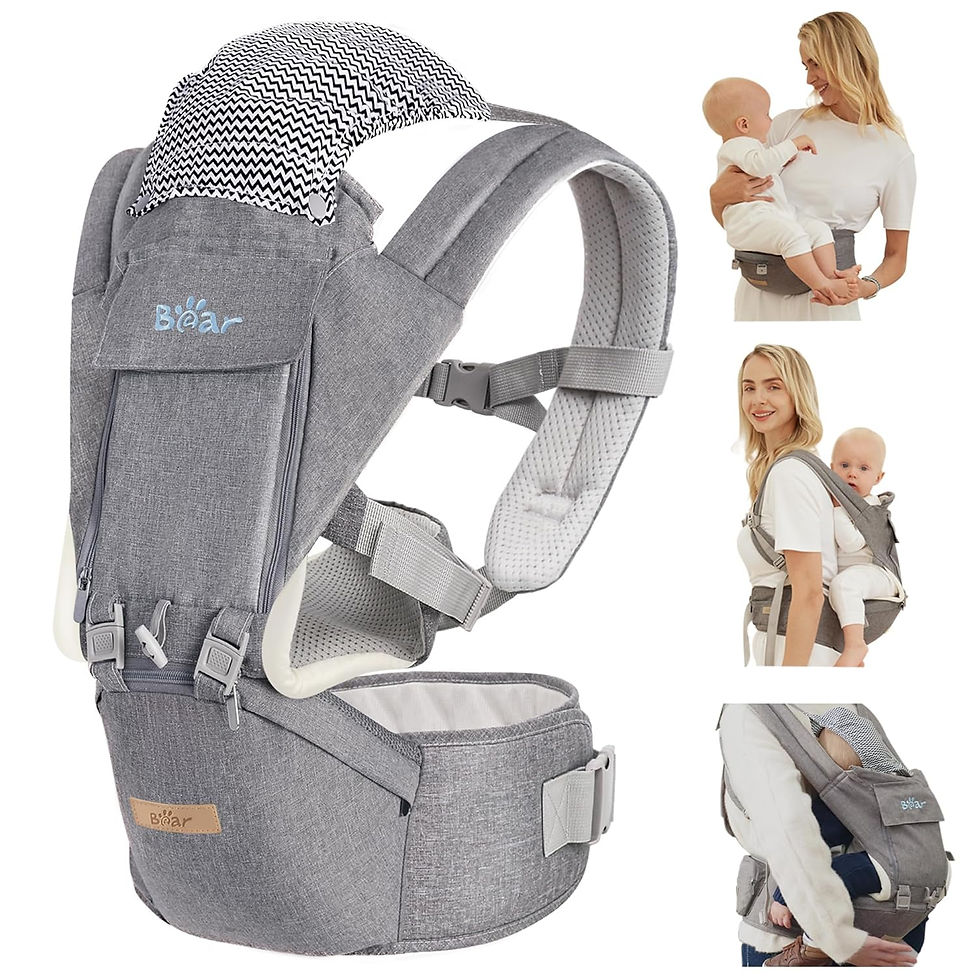
Front load slings are all the rage apparently and finding a back load sling where you carry the child BEHIND you are difficult to find. We had to order ours from the UK. However, now Amazon carries one.
You don't want to be carrying your infant or toddler in front of you. If someone fires a shot at you, who will likely take that bullet?
Your baby or toddler.
By keeping your child on your back, your body serves as a shield to protect your child.
If someone throws something at you, again your body serves as a protective shield for your child.
SCAVENGING FOR FOOD AND MEDICINE
You will need to know how to identify and scavenge for food and medicinal plants because your stockpiled food won't last forever and grocery stores will be emptied.
The government already cut our food supply chain well over a year ago and we're already seeing the affects of this. I've spoken with the grocery store owners of our stores up here and they're having trouble getting products in. If you wonder why your grocery bills have gone through the roof, this cutting of the food supply chain is why.

One of the most comprehensive books I've found to learn to identify edible and medicinal plants is Identifying and Harvesting Edible and Medicinal Plants in Wild (and Not So Wild) Places by "Wildman" Steve Brill and Evelyn Dean.
This book serves as a definitive guide to foraging, harvesting, and preparing over five hundred different wild plants for food and medicine. It includes detailed illustrations and recipes, making it a valuable resource for both beginners and experienced foragers.
Just as the government has begun outlawing collecting rainwater as being illegal, they're doing the same thing with gardens. And once the unprepared get hungry enough they'll be on the prowl for food and most likely, eventually find and raid your garden.
The same is true of hungry animals. Our whitetail deer up here can destroy a garden in a nanosecond.
I routinely take walks in the woods to identify the locations of edible and medicinal plants. When I discovered my new home had not one single dandelion, I went and dug some up, container planted them and grow them on my second story deck where no one and nothing can get to them. They're a fantastic medicinal and edible plant.

Cattails are another edible and medicinal treasure. Did you know the fuzzy brown heads of the cattails when cooked properly taste like corn on the cob?
Start practicing preparation methods of edible/medicinal plants now so you know how to prepare them when the SHTF.
Here are some other good foraging books:
Edible Wild Plants: A North American Field Guide by John Kallas
This field guide provides detailed descriptions and photographs of edible plants found in North America, along with information on their uses and preparation methods. It's an excellent resource for anyone interested in foraging.
The Forager's Harvest by Samuel Thayer
This book focuses on the art of foraging and includes detailed information on various edible plants, their habitats, and how to prepare them. Thayer's engaging writing style makes it accessible and enjoyable to read.
Wild Remedies: How to Forage Healing Foods and Craft Your Own Herbal Medicine by Rosalee de la Forêt and Emily Han
This book combines foraging with herbal medicine, providing insights into how to identify, harvest, and use wild plants for health benefits. It includes recipes and practical tips for incorporating these plants into your daily life.
Backyard Foraging: 65 Familiar Plants You Didn't Know You Could Eat by Ellen Zachos
This guide focuses on common plants found in backyards and urban areas, offering easy-to-follow instructions for identifying and using them in cooking and herbal remedies.
These books provide a solid foundation for anyone interested in exploring the world of edible and medicinal plants, offering practical advice, safety tips, and delicious recipes to enhance your foraging experience.
PROCURING GAME
If you don't want to have to fend off starvation by eating bugs, mice, rats, etc. then you better know how to build snares and traps for fish and game. You're saying it would snow in hell before you'd eat bugs, mice, rats, snakes? You get hungry enough and you will! Been there, done that! You can be the biggest PETA advocate on the planet but when you're on the verge of starvation and your mind and body are rapidly breaking down as a result, you will put anything in your mouth and try to eat it, trust me. Without even cooking it first if need be.
No, hunting, snaring, trapping is not as easy as it looks! It takes a lot of work, time and failures and there's no guarantee you'll catch anything. And animals aren't stupid, they know when they're being hunted. Ask any hunter the opening day of deer season!
You should also know how to field dress game and it might be worth your while to have a portable field dressing kit in your BOB.

I recommend KNINE OUTDOORS Hunting Deer Knife Set Field Dressing Kit Portable Butcher Game Processor Set, 12 Pieces
$60
It just makes field dressing game so much easier.
These are the most basic survival skills you'll need in a survival scenario or that apply in any kind of crisis or societal collapse.


Comments